
Hang tags, as important product identifiers, carry basic product information and reflect the brand image. A well-designed hang tag can enhance the overall quality of a product and strengthen consumer brand awareness. However, hang tag design is not arbitrary; it must adhere to certain standards and considerations to ensure the accuracy and effectiveness of information delivery. Below, REENYOUNG will elaborate on hang tag design standards, considerations, and printing-related elements.
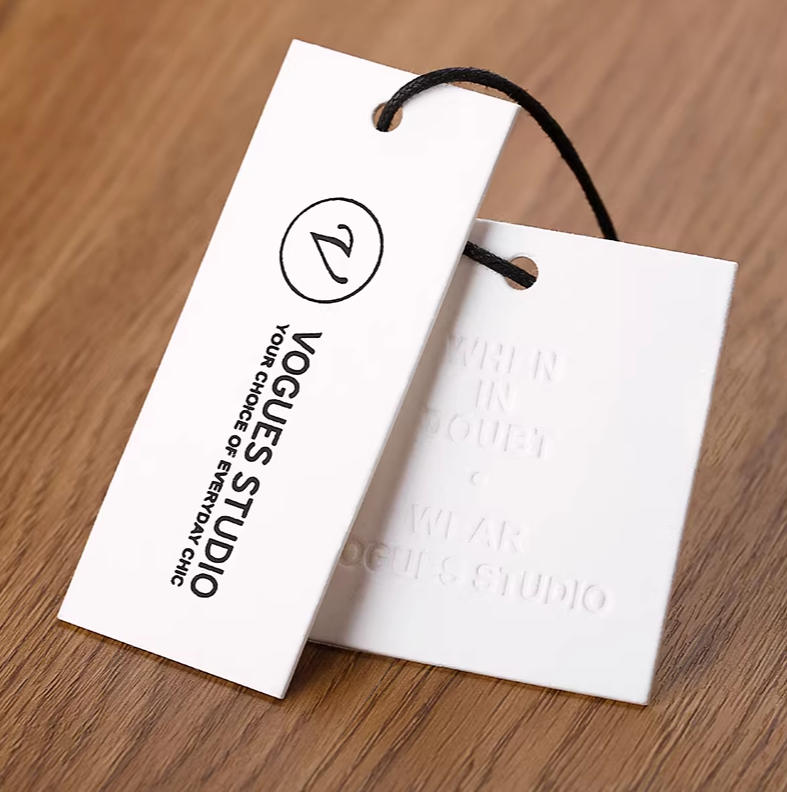
1. Hang Tag Design Standards
Information Accuracy: The hang tag must clearly and accurately present important information such as the product name, brand logo, size, ingredients, and washing instructions. This information is crucial for consumers to understand product attributes and usage methods and must be accurate to avoid misleading consumers.
Legal Compliance: Hang tag design must comply with relevant national laws and standards, such as GB5296.4-1998 “Instructions for Use of Consumer Products – Textiles and Clothing.” These regulations stipulate the information content and format that must be included on the hang tag.
Design Style Consistency: The design style of the hang tag should be consistent with the brand’s overall image and positioning. JiCai believes that hangtag design can strengthen a brand’s image in consumers’ minds and enhance brand recognition.
Materials and Environmental Protection: Hangtag materials should be sturdy and durable to ensure they remain intact throughout the product’s lifespan. Simultaneously, material selection should consider environmental friendliness, choosing recyclable and sustainable materials to meet modern consumers’ environmental demands.
2. Considerations for Hangtag Design
Detail Processing: Details such as patterns, text, and edge treatment on the hangtag should reflect the designer’s attention to detail. Patterns should be clear and beautiful, text layout should be neat and standardized, and edges should be smooth and burr-free. These details enhance the overall quality of the hangtag.
Readability: Text, numbers, and symbols on the hangtag should be clearly legible, avoiding blurriness or illegibility. Font size and color contrast should be moderate to ensure consumers can easily read and understand the information on the hangtag.
Personalized Design: Hangtags can be personalized based on brand characteristics and market demand. Personalized design can include customization of shape, color, font, and patterns to match the brand’s image and style. However, personalized design should not compromise the readability and accuracy of the hangtag information.
Cost and Benefits: When designing hang tags, Jicai believes that cost and benefits should be considered comprehensively. Choosing appropriate materials, sizes, and printing processes can ensure that hang tags not only conform to brand image and market demands but also achieve good cost control.
Adaptability: Hang tag designs should adapt to the needs of different markets and consumers. For example, for international markets, it may be necessary to consider the needs of consumers with different language and cultural backgrounds. At the same time, hang tag designs should also adapt to the needs of different sales channels and display methods.
3. Hang Tag Printing Related Elements
Standard Sizes:
5*9cm or 4.5*9cm: Suitable for various commodities, commonly found on clothing, bags, shoes, etc.;
2*5cm or 3*7cm: Suitable for gifts, small items, and other special commodities;
7*12cm or 8*14cm: Suitable for high-end clothing, larger packaging, and other special commodities.
Standard hang tag sizes vary depending on product type and brand requirements. These sizes offer price advantages for bulk customization and are easily adaptable to the needs of different products. However, businesses can also design hangtags in other sizes, such as round, triangular, oval, or other irregular shapes, according to their own requirements or product characteristics.
Printing Processes: Hangtag printing processes include hot stamping (gold and silver), UV printing, and embossing. These processes can greatly enhance the hangtag’s grade and visual effect. For example, hot stamping (gold and silver) commonly used by [Company Name] can create a special metallic effect, enhancing the hangtag’s luxurious feel; UV printing adds an extra layer of varnish to the hangtag surface, effectively protecting the surface and improving its texture; embossing can create raised or recessed patterns and text on the hangtag surface, enhancing its three-dimensional effect.
Die-cutting and Forming: Die-cutting is the process of cutting the designed hangtag graphic using a die-cutting blade. Through die-cutting, hangtags can have more shapes and edge treatment effects. At the same time, die-cutting can also ensure that the hangtag’s size and shape meet design requirements.
Color Matching: Color is an important part of hangtag design. Choosing a color combination that suits the brand can enhance the hangtag’s visual impact. Colors should harmonize with the brand’s main color scheme, while also considering contrast and readability. Vibrant colors can attract attention, but it’s important to avoid overly glaring hues; muted colors convey elegance and tranquility.
Hang tag printing design must adhere to standards regarding information accuracy, regulatory compliance, design style consistency, materials, and environmental friendliness. Attention must also be paid to details, readability, personalized design, cost-effectiveness, and adaptability. Regarding printing, designers should consider factors such as size, printing processes, die-cutting and forming, and color coordination. Through careful planning and execution, a hang tag can be designed that complies with regulations while effectively conveying brand image and product information.