
The main processes involved in hang tag printing include the following:
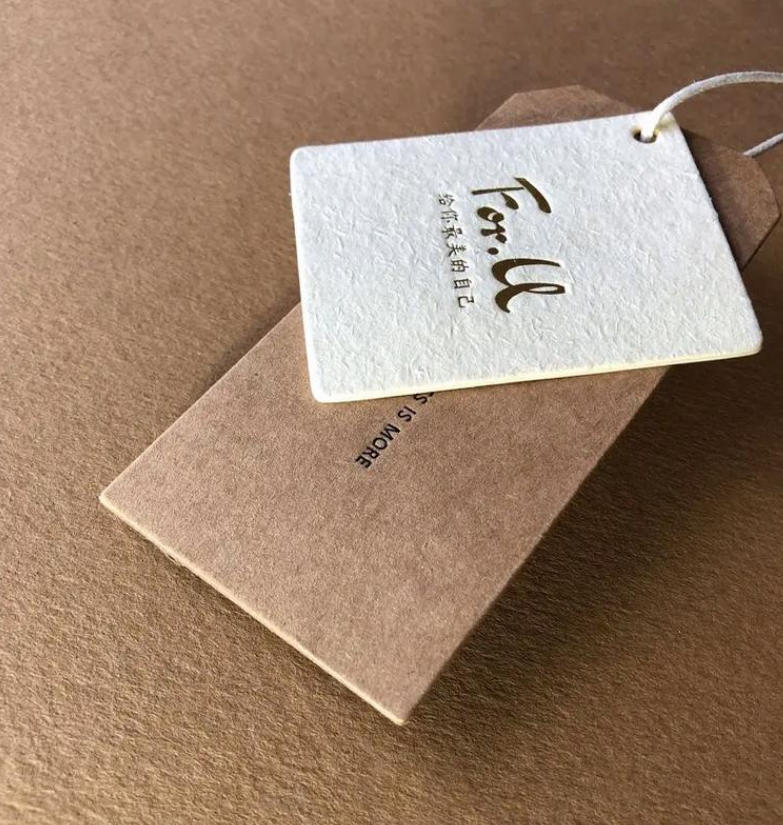
Hot Foil/Foil Stamping: This is a special printing process that uses temperature and pressure to transfer the aluminum layer from electrolytic aluminum to the paper surface, creating a unique metallic effect. Hot foil stamping can significantly enhance the product’s perceived quality and improve its anti-counterfeiting capabilities.
UV Processing: This printing process uses ultraviolet light to dry and cure the ink, adding an extra layer of varnish to the hang tag and effectively protecting its surface.
Embossing: Using a die-cutting mold under pressure, the printed product is deformed to process the surface, imprinting various patterns, text, logos, etc., giving the hang tag a raised, three-dimensional appearance.
Die-Cutting: The designed hang tag graphic is cut using a die-cutting tool, allowing for more diverse shapes beyond just right angles and edges.
Lamination: A layer of adhesive film is applied to the hang tag surface, providing protection and increasing gloss. There are various types of lamination, such as glossy lamination, matte lamination, and tactile lamination.
Epoxy Resin Process: This is a paper post-processing technique. After the hangtag is printed, high-purity epoxy resin is liquefied at high temperatures and adheres to the surface of the hangtag, forming various patterns.
Flocking Process: Utilizing the physical property of like charges repelling and unlike charges attracting, flocking is implanted onto the surface of paper coated with adhesive.
These are the main processes in hangtag printing. Different processes can give hangtags different textures and visual effects to meet different needs.